Programming as Commodity
In 2026 writing code is as easy as building sandcastles. Programming becomes an add-on; creativity, curiosity, taste and distribution become the core. A field guide for builders with an entrepreneur's mindset.
Remember building sandcastles as a kid? Nobody asked for a permit, a civil engineer or a construction company. You grabbed a bucket and built.
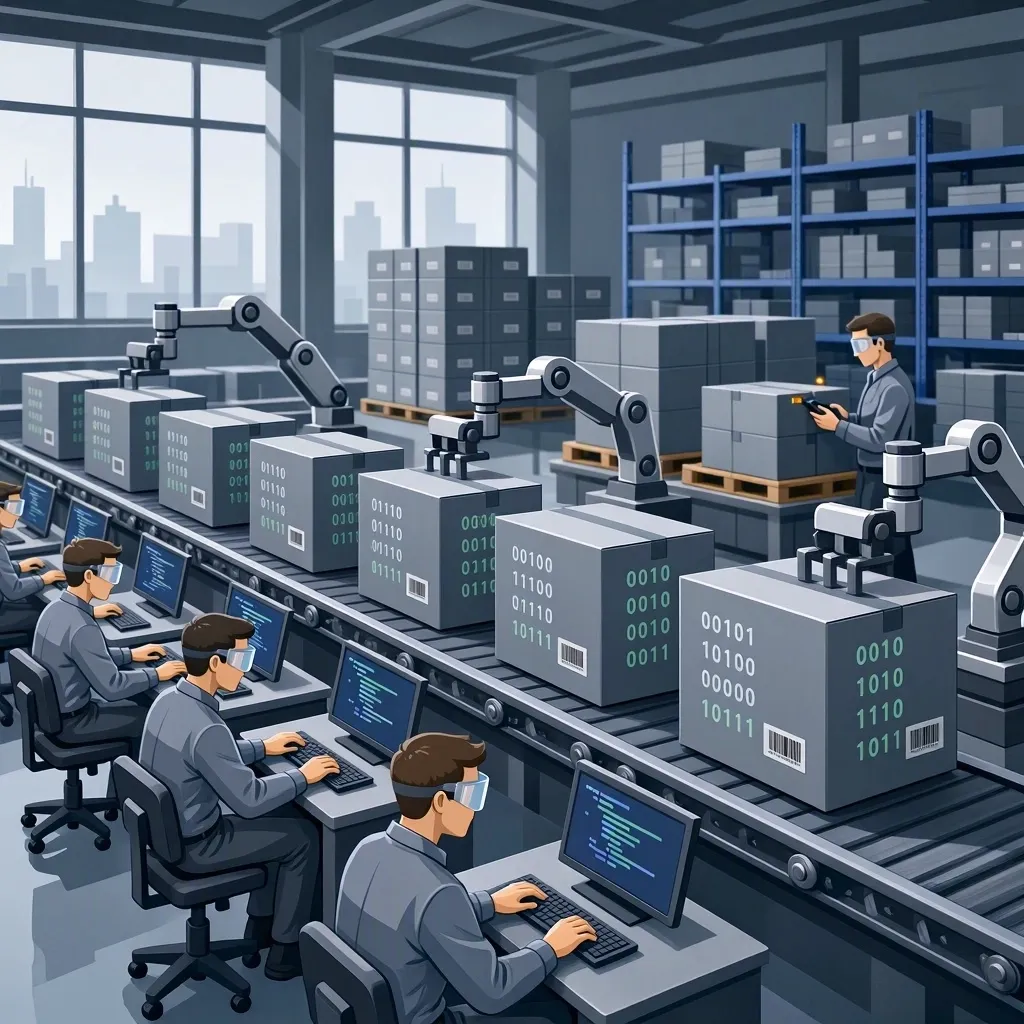
In 2026 programming feels the same. Buy some AI tokens, open an agent, describe what you want, and a few hours later you have a working app. People joke that anyone can now “build a GTA 5 clone over the weekend”. It is a joke — GTA 5 took years and well over a thousand people, and it is much more than code: art, animation, physics, world design, sound, endless testing. But there is a real point behind it: the cost of turning an idea into running software has collapsed.
When something becomes cheap, standard and widely available, economists call it a commodity. Electricity, cloud servers, bandwidth. Code is joining that list.
That does not mean everyone will build the next GTA. Cameras in every phone did not make everyone a photographer, and Word did not make everyone a writer. It means something more interesting: software is no longer the main barrier to starting a business.
There will always be the top ~5% of exceptional engineers who design compilers, databases, game engines and the AI models themselves. But for the rest of us the opportunity is different: switch from the “coder” mindset to the “creator/entrepreneur” mindset.
For decades the first question of anyone with an idea was:
“Whom do I need to hire to build this?”
Today the question is:
“Can I find a problem worth solving, describe the solution, judge the result and find people who will pay for it?”
That is a shift of identity. Programming stops being the skill and becomes a skill — an add-on, like spreadsheets or email. You still benefit from understanding code, architecture, databases and security (it lets you judge what the AI produced), but it is no longer the gate. The center of gravity moves to things that were always human and are now the bottleneck:
| Then: core skill | Now: core skill | Why it matters when code is cheap |
|---|---|---|
| Writing code | Creativity | Anyone can build. Few can imagine something people actually want. Ideas, combinations of ideas and new angles are the new scarce resource. |
| Knowing frameworks | Curiosity | Builders who keep asking “why does this hurt?” find problems others don’t notice. Prototypes are cheap — so curiosity can now be tested, not just discussed. |
| Debugging | Empathy & domain knowledge | A physiotherapist, an accountant or an HVAC installer knows pains that a typical developer never sees. Now they can turn that knowledge into software without waiting for an IT budget. |
| Implementing specs | Taste & judgment | When the AI can produce ten versions in an hour, the value is in choosing the right one — and in knowing what to leave out. |
| Shipping features | Storytelling & distribution | Building got 10x cheaper; customers did not get 10x easier to find. The story you tell and the audience you have decide who even sees your product. |
| Following the plan | Courage to experiment | A failed experiment used to cost a quarter. Now it costs a weekend. The winners run more experiments, faster, and kill bad ideas without regret. |
| “It compiles” | Responsibility | Someone must own security, data and the promise made to customers. AI writes code; it does not sign contracts. |
Think of the AI as a very fast, tireless team of juniors. Your job is to be the director: you decide what the film is about. The crew executes.
These are not hypotheticals. Here are people who skipped the traditional software team:
Pieter Levels, a solo founder with zero game-dev experience, prompted an AI tool to “make a 3D flying game in the browser” in February 2025. The first prototype took about three hours; roughly 90% of the code was AI-generated (Cursor, Grok, Claude). The game, fly.pieter.com, went viral and within weeks was reported at around $12k MRR from selling in-game planes and ad placements (Indie Hackers).
Not a GTA clone. But a multiplayer 3D game, built and monetized by one person, in a month. And note: the code was the easy part. Levels already had a huge audience — distribution, not code, made it work.
Maor Shlomo built Base44, an AI app builder, essentially alone. About six months after launch, with 100k+ users and roughly 80 million in cash (plus earn-outs). He had hired a handful of people only shortly before the deal (Ynet, TechCrunch).
Lovable, the Swedish “build an app by chatting” platform, crossed $100M ARR about eight months after launch with 45 full-time employees (TechCrunch). A decade ago a company at that revenue would typically employ hundreds. Lovable is also the commodity itself: a business that sells “programming as a commodity” to others.
Inspired by Fly, Nicola Manzini built a multiplayer sailing simulator in the browser with Cursor and Copilot (~85% AI-generated code) and monetized it with branded yachts and in-game ads, reportedly reaching around $8k MRR within two months (Indie Hackers). The creative twist (sailing instead of flying) mattered more than the code.
Sebastian Volkis, with no coding background, started on a no-code tool, then rebuilt his support chatbot in Next.js with ~80% AI-written code. Reported revenue: a few thousand dollars MRR and 11k+ users (Indie Hackers).
Note: indie revenue numbers are mostly self-reported. Treat them as order of magnitude, not audited financials. Survivorship bias applies — for every Fly there are thousands of games nobody played.
Anecdotes are fun, but let’s look at the studies. The picture is more nuanced than “AI makes everyone 10x”.
| Study | Who | Result |
|---|---|---|
| Peng et al., 2023 — The Impact of AI on Developer Productivity: Evidence from GitHub Copilot | Randomized controlled trial, writing an HTTP server in JS | 55.8% faster with Copilot |
| Cui et al., Management Science — The Effects of Generative AI on High-Skilled Work: Three Field Experiments | 4,867 developers at Microsoft, Accenture and a Fortune 100 firm | +26% completed tasks; less experienced developers gained more |
| Brynjolfsson, Li, Raymond, 2023 — Generative AI at Work (NBER) | 5,179 customer support agents | +14% productivity on average, +34% for novices, minimal effect for top performers |
| Dell’Acqua et al., 2023 — Navigating the Jagged Technological Frontier (Harvard/BCG) | 758 BCG consultants | 12% more tasks, 25% faster, 40% higher quality inside AI’s capability frontier; on a task outside it, AI users did noticeably worse |
| METR, 2025 — experienced open-source developers | 16 senior devs, 246 real issues in their own large repos | 19% slower with AI — while they believed they were ~20% faster |
| Daniotti et al., Science — Who is using AI to code? | 30M+ GitHub commits, ~170k developers | AI writes an estimated ~29% of US Python functions; output +3.6%; experienced programmers capture almost all the gains |
| Demirer, Musolff, Yang, 2026 — Writing Code vs. Shipping Code (NBER) | 500k+ GitHub developers | Commits up 30% / 180% / 240% (autocomplete / interactive agents / autonomous agents), but releases only ~30%. App marketplaces: sharp rise in new apps, no increase in total usage |
| Veracode, 2025 — GenAI Code Security Report | 100+ LLMs, 80 coding tasks | 45% of generated code had OWASP Top 10 vulnerabilities |
| Brynjolfsson, Chandar, Chen, 2025 — “Canaries in the Coal Mine?” (Stanford) | US payroll data, millions of workers | 13% relative decline in employment of 22–25-year-olds in the most AI-exposed jobs since late 2022; experienced workers stable or growing |
- Writing code is no longer the bottleneck. Demirer et al. show it beautifully: commits explode, shipped releases grow far less. The human parts — deciding, integrating, verifying, delivering — are the weak link.
- More apps, same attention. New apps flood the marketplaces, total usage does not grow. That is the definition of a commodity. When supply of code is unlimited, creativity and distribution decide who wins.
- AI raises the floor. Novices and average performers gain the most on well-defined tasks. Anyone can now build a decent prototype.
- The top 5% stay valuable. On large, mature codebases experts did not get faster — and in the large-scale GitHub data experienced developers captured most of the gains. Judgment compounds.
- Building got cheap, maintaining did not. Nearly half of generated code has security issues. I wrote about this in The Maintenance Problem — AI makes the “build” part trivial and the “maintain” part more important.
The defensible thesis is therefore not “programming is effortless”. It is: AI radically lowers the cost of producing code, but not the cost of having a good idea, earning trust and delivering value. That gap is where the creator-entrepreneur lives.
Let’s make it concrete. Take a classic small B2B product: scheduling, client records and billing software for independent physiotherapy clinics (swap in dental offices, driving schools, beauty salons — the pattern is identical).
| Role | Headcount |
|---|---|
| Backend developers | 2 |
| Frontend / mobile developer | 2 |
| QA / tester | 1 |
| UI/UX designer | 0.5 |
| DevOps / admin | 0.5 |
| Customer support | 1–2 |
| Marketing (content, ads) | 1 |
| Sales / onboarding | 1–2 |
| Total | ~9–11 people, 9–12 months to first paying customer |
| Person | Owns | AI does the heavy lifting on |
|---|---|---|
| The Builder (technical) | Architecture, data model, security, code review, releases | Coding agents write features, tests, migrations, UI; AI reviews PRs; AI drafts docs |
| The Seller (business) | Customer discovery, sales, pricing, onboarding, partnerships | AI drafts content, outreach, demo scripts, support answers, analyzes calls and churn |
Notice that both roles are creative roles now. The Builder spends most of the time deciding what and how, not typing. Time to first paying customer: 6–10 weeks.
- The Seller talks to 20 clinic owners. Record calls (with consent), transcribe, and let an LLM extract pains, quotes and willingness to pay.
- Output: a one-page problem statement and a prioritized list of 5 must-have features. Everything else goes to “later”.
- Prompt example: “Here are 20 interview transcripts. Group the pains by frequency and intensity. Quote the 3 strongest statements for each. Which pains are people already paying to solve?”
The Builder does not write most of the code — he writes precise specs and acceptance criteria. Each feature is a markdown file: user story, data model changes, edge cases, test cases. The agent implements against the spec; the human reviews.
Given the research above, the Builder’s real job is quality control:
- Boring, mainstream stack (e.g. Postgres + one web framework + managed hosting). LLMs are best at what they have seen most.
- Tests are mandatory and written before the agent implements the feature. CI blocks merges without green tests.
- Security pass on every PR: static analysis (SAST), dependency scanning, plus an AI reviewer prompted specifically for OWASP Top 10. Health-related personal data means GDPR — get a human audit before scaling.
- Small PRs. An agent’s 3,000-line diff is unreviewable. Ask for small, focused changes.
- Backups and restore drills monthly. Automated, but verified by a human.
- The Seller runs founder-led sales: demos, onboarding calls, closing the first 10 customers personally. AI prepares a briefing for each prospect and a follow-up email after each call.
- Content engine: one deep article per week written by the Seller from real customer conversations, polished with AI; AI repurposes it into LinkedIn posts, a newsletter and FAQ pages.
- Partnerships with physio associations and equipment distributors — still a human, handshake business.
- AI assistant in the app answers “how do I…” questions from the docs.
- Anything about billing, data or bugs escalates to a human within the same day.
- Every week an LLM clusters all tickets: top 3 confusion points become UX fixes or docs. Support becomes product input, not a cost center.
| Day | Builder | Seller |
|---|---|---|
| Mon | Plan week, write specs | Pipeline review, outreach |
| Tue–Thu | Review & merge agent work, release | Demos, onboarding, content |
| Fri | Security/quality review, backups check | Ticket analysis, metrics, customer calls |
| Together (1h) | Metrics: MRR, activation, churn, top tickets → next week’s priorities |
| Item | Approx. cost |
|---|---|
| AI coding agents & LLM API for 2 people | $200–600 |
| Hosting, database, email, monitoring | $100–300 |
| SaaS tools (CRM, helpdesk, analytics) | $100–200 |
| Accounting, legal, insurance | $300–600 |
| Total (excl. salaries) | ~$700–1,700 |
With a price of ~$49/month per clinic, around 40 customers cover tools and infrastructure, and a few hundred customers make a healthy two-person business. The old 10-person team needed thousands just to break even.
The second example is even smaller and shows the “domain expert turned creator” path. Imagine someone who worked for years at a company installing air conditioning and heat pumps in Poland.
The pain: small installation firms receive inquiries via web forms, email and phone. Each one must be read, missing details chased, the price list checked, a quote prepared, sent, and followed up. The owner does it in the evening — or loses leads.
The product: QuotePilot takes inquiries from email or a form, extracts the data, flags what is missing, drafts a quote from the company’s approved price list, and prepares the reply. A human approves the price and the final quote.
The golden rule: the LLM reads and writes; plain code calculates. The model recognizes the service and the parameters and suggests line items. Prices, permissions, billing and data validation are deterministic code. Never let a language model invent the numbers on an invoice.
| Days | Goal | How the LLM helps |
|---|---|---|
| 1–14 | Sell the solution to the problem, not the app. Talk to ~20 installers, collect anonymized inquiries and price lists, get 3–5 firms to agree to a paid pilot. If nobody wants to pay — go back to the problem. | Analyzes interview notes, finds recurring pains, drafts the MVP spec |
| 15–30 | Build the smallest thing that saves time on one task. Inquiry in → data extracted → missing info flagged → draft reply + PDF quote. A simple panel with a list of inquiries. No mobile app, no ten integrations. | Coding agent builds UI and core features, writes tests and onboarding docs |
| 31–60 | Turn the prototype into something you can trust. Multi-tenant data separation, secure login, audit history, backups, monitoring. Check that firm A can never see firm B’s data. | Generates unit/integration tests, error scenarios, API docs, log analysis — every change reviewed by a human |
| 61–90 | Sell the outcome, not “AI”. Pilot with 5–10 firms. Measure time from inquiry to quote, number of corrections, response speed, weekly usage. Talk to customers every week. | Classifies feedback, summarizes calls, proposes fixes, drafts personalized sales messages |
At PLN 499/month: 20 customers = ~PLN 10k MRR, 50 customers = ~PLN 25k, 100 customers = ~PLN 50k — before costs of models, hosting, payments, taxes and the founder’s time. Not a forecast — a reason to go and test it.
What made this business possible is not the code. It is years of watching installers drown in paperwork — domain knowledge plus the creativity to see a product in it.
Be honest about the limits:
- Bus factor = 1. If the Builder gets sick, nobody understands the system. Keep architecture docs and specs up to date — AI makes this cheap.
- Complexity creep. AI makes adding features free, so you will add too many. Every feature is maintenance forever.
- Commodity cuts both ways. If you can build it in a month, so can your competitors. Your moat is customer relationships, domain knowledge, brand and data — not code.
- Regulated domains (health, finance) still need human experts and audits.
- Data and vendors. Customer documents must not land in AI tools whose terms and retention you haven’t checked.
For decades the advantage was: “I can program.”
In the coming decade the advantage will be: “I can find a valuable problem, imagine a solution others don’t see, and use AI to build it.”
Programming is not disappearing. It is becoming what electricity is today — essential, everywhere and increasingly invisible. Electricity became a commodity and created a hundred years of businesses built on top of it.
The sandcastle is easy to build now. The question is whether you know where to build it, who will come to see it, and how to keep it standing when the tide comes in.
In a world where software is a commodity, the most valuable resource is not code.
It is vision.